African Americans played an integral role in the formation, growth and culture of three key Northern California cities – Sacramento, Oakland, San Francisco – and, in many cases, the entire country. This three-city tour brings to life the many contributions of African Americans through stories, sights, and cultural objects. You’ll gain an understanding of how the three cities are integrally linked with each one having a distinct vibe, while rooted in the Black experience.
Sacramento
Coloma
Hwy 50, exit Shingle Rd. to Hwy 49
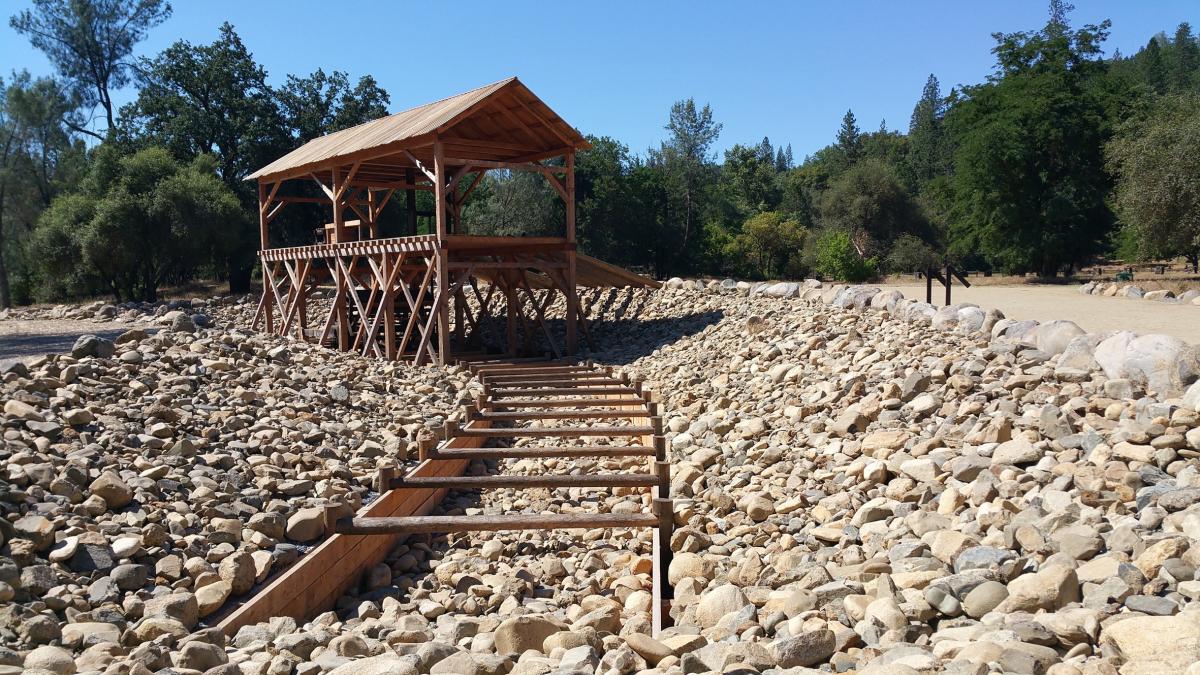
Coloma is the location of Marshall Gold Discovery State Park, where gold was discovered in 1848. The discovery of gold led to a migration of people from all over the world to California in hopes of becoming rich. The area around Coloma was built up by one of America’s first families of freed enslaved people.
Nancy and Peter Gooch were born into slavery. Their owner brought them to California to work and take care of his needs. When California entered statehood in 1850, Peter and Nancy were freed. They bought 80 acres of land in 1858 and would eventually own 429 acres in Coloma. However, much of it would be taken by the State of California through eminent domain. Today the orchards they built occupy only two acres of land on the 576 acres of the park. California State Parks is in the process of restoration to tell the broader story of African Americans in Coloma.
(City crossover: Leidesdorff Statue in San Francisco)
West End
No longer in existence, the West End was home to most of the city’s Black residents, and many ethnic minorities. The West End’s main thoroughfare “showcased several Black-owned businesses that catered to Black clientele, such as the Bank’s Café, the Mo-Mo Club and Club Zanzibar." In 1951, the Crystal Palace was considered the "Capitol City's largest Negro owned and operated enterprise" that attracted well-known musicians.
The West End occupied what is now Capitol Mall. It stretched from the Sacramento River waterfront to the Capitol Building on 10th Street, and from the Southern Pacific Railroad depot on the north to Y Street (now Broadway) on the South. In 1954, after the State of California passed the Redevelopment Act that gave authority to cities to acquire property deemed blighted and sell or lease to private developers to create new uses, the City of Sacramento began the demolition of the West End for the redevelopment of the Capitol Mall development. By 1961, all buildings within the West End 15-block project area had been razed.
St. Andrews African Methodist Episcopal Church
2131 8th St., Sacramento
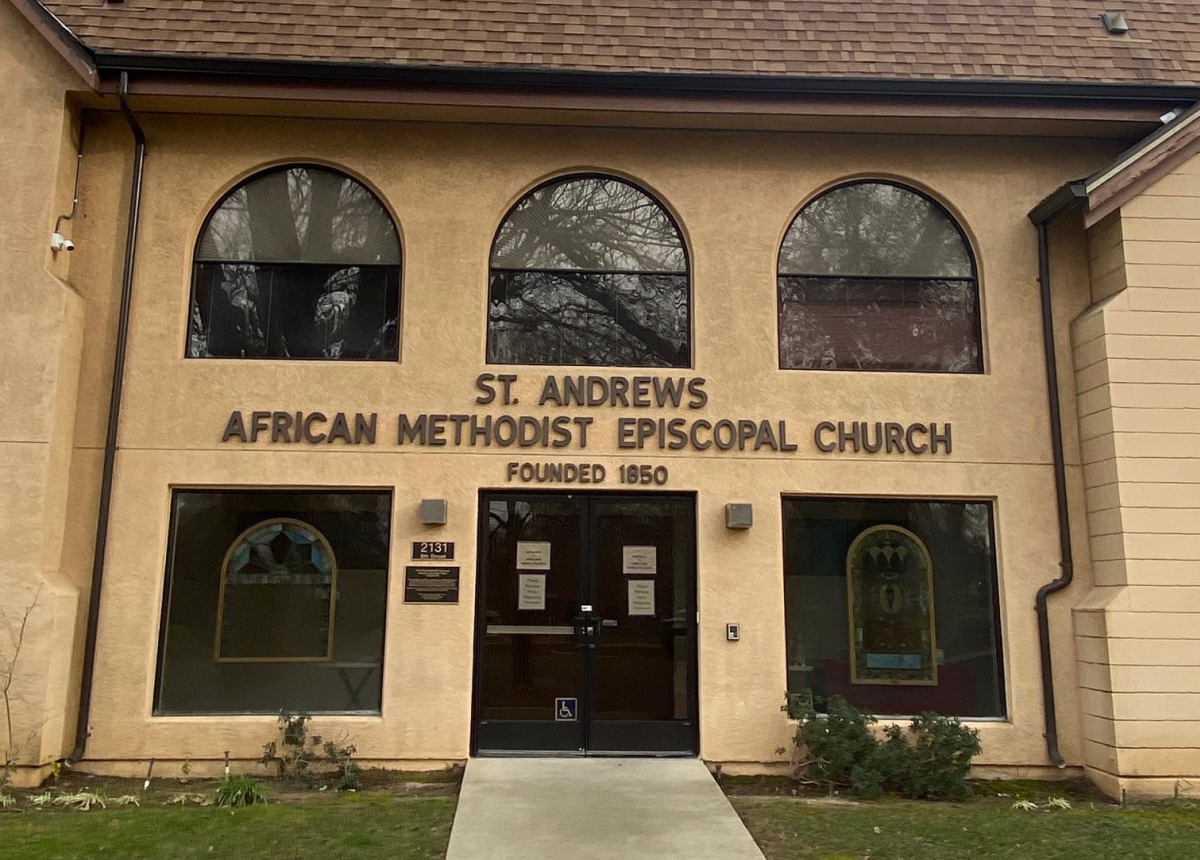
The oldest historically Black church west of the Mississippi, St. Andrews AME was established at the time of the Gold Rush. Between 1855 and 1865, the church hosted three of the four California Colored Citizens’ Conventions, which were organized to “illustrate the economic progress Black Californians had made during their short residency in the state and to highlight a number of civil rights grievances, including the inability of African American males to vote.”
Oak Park
Broadway & 34th St. to Stockton Blvd.
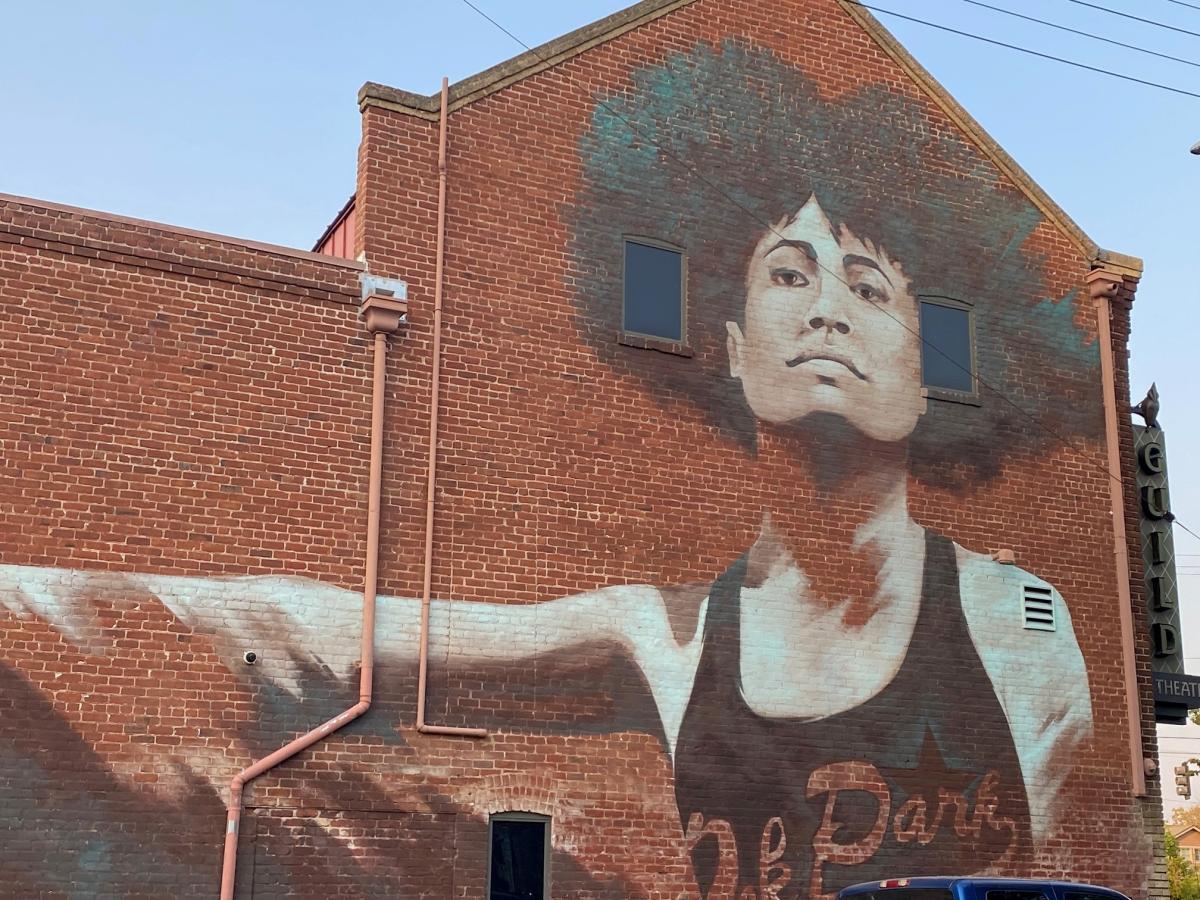 Mural by Jaya King
Sacramento’s first suburb, Oak Park, came into being in 1887. It’s affordability, lower taxes, and thriving businesses attracted thousands of white home-seekers. Oak Park was off limits to Blacks and other minorities due to restrictive covenants. In the early 20th century, Oak Park and other areas began to open up to more African Americans. And in the 1950s and 1960s after the redevelopment of the West End, Oak Park experienced an influx of African Americans, accompanied by white flight.
Notable locations in Oak Park:
Dunlap’s Dining Room (once located at 4322 4th St.) opened in 1930 and became a popular dining destination for Sacramento’s political and social elite. Dunlap’s Dining Room was featured in the Negro Motorists Green Book. It closed in 1968.
40 Acres Complex is a mixed-use retail complex made up of distinct operations: The Guild Theater, Underground Books, Fixins Soul Kitchen, Old Soul Coffee Co., and World Class Faders. It is owned by former Mayor and Oak Park native Kevin Johnson.
Huey P. Newton Dedication - In the 1960s, the Sacramento branch of the Black Panther Party set up an office in the neighborhood. In 2016, Mayor Kevin Johnson designated a Victorian-era home on Third Avenue as the Huey P. Newton House to honor the accomplishments of the Black Panther Party and its founder and leader.
Oakland
Delilah Beasley House
705 34th St., Oakland
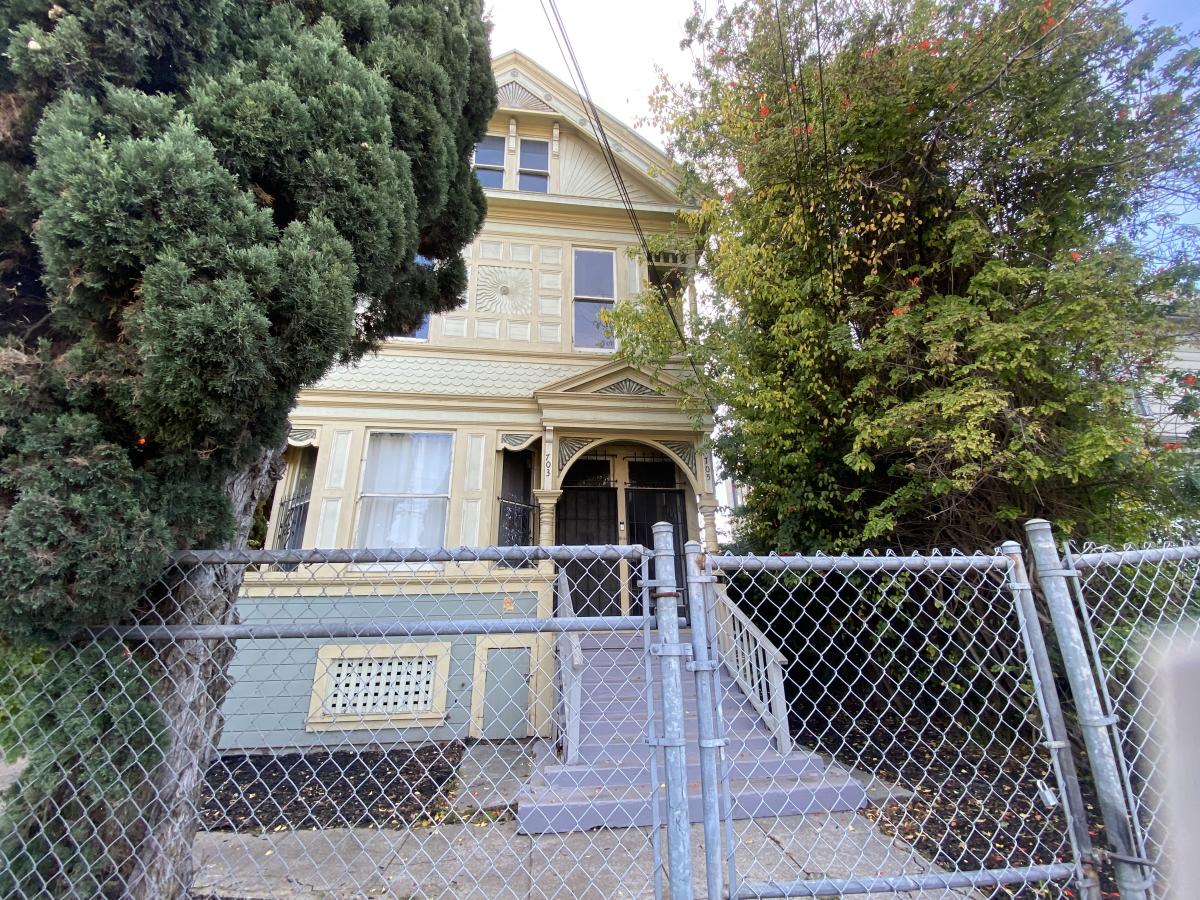
Delilah Beasley was a pioneering woman who came to California in 1910 and became the first African American woman to be published regularly in a major metropolitan newspaper, the Oakland Tribune. She would publish “The Negro Trailblazers of California” in 1919. This book chronicled the trials and tribulations of Blacks during the Gold Rush and into the early 20th century.
St Andrew’s Missionary Baptist Church
2624 West St., Oakland
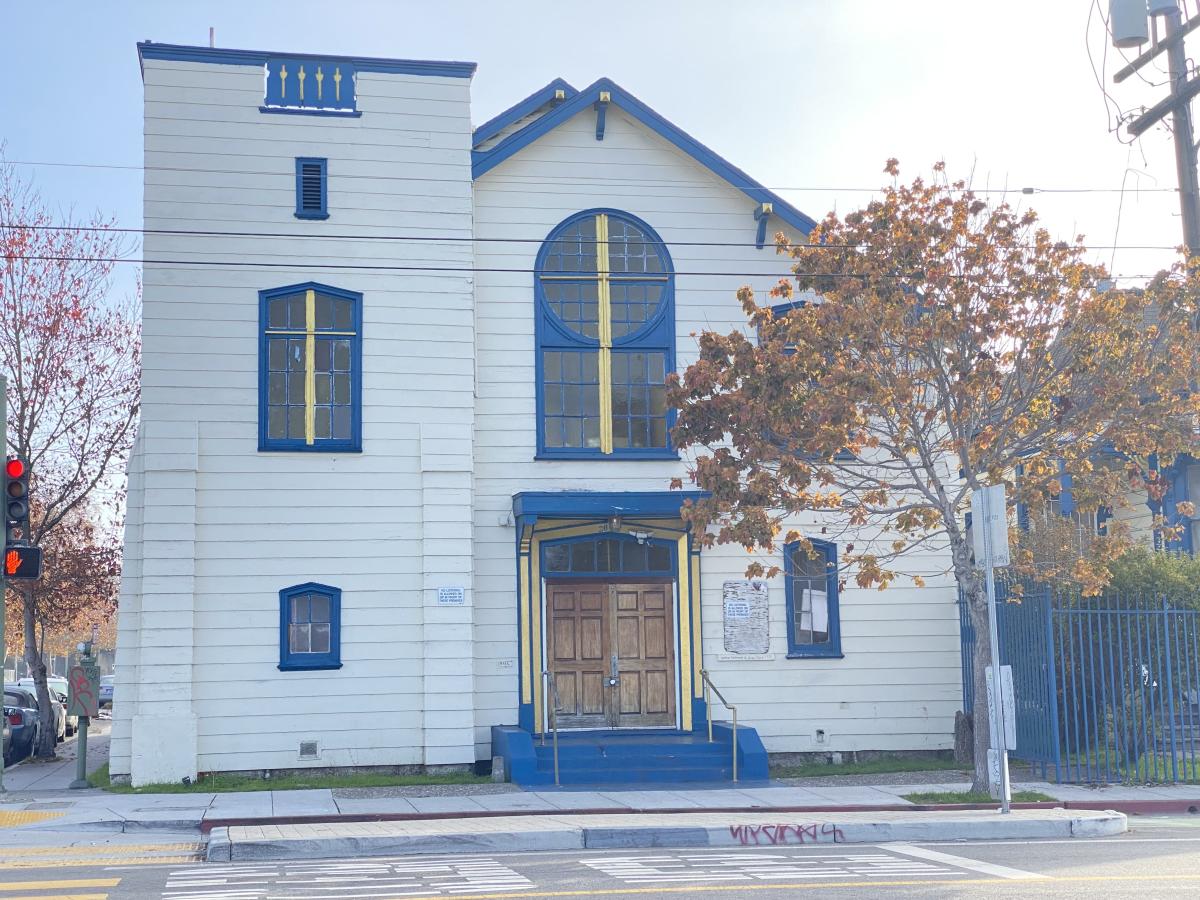
St. Andrew's Missionary Baptist Church was originally built in 1920 to serve African Americans. For 35 years (1911 - 1946), Father David Wallace, a leader for the NAACP and other activist organizations, as well as the mentoring of Delilah Beasley, pastored at the church. The church is mostly remembered for having been the site as the first location of the Black Panther breakfast program for children in 1969. In 1975, the church merged with another, and soon became St. Andrew’s Missionary Baptist Church.
Black Panther Party Museum
1427 Broadway, Oakland
The Museum @ The Mural House (Pictured)
831 Center St., Oakland
Original Black Panther Party Headquarters
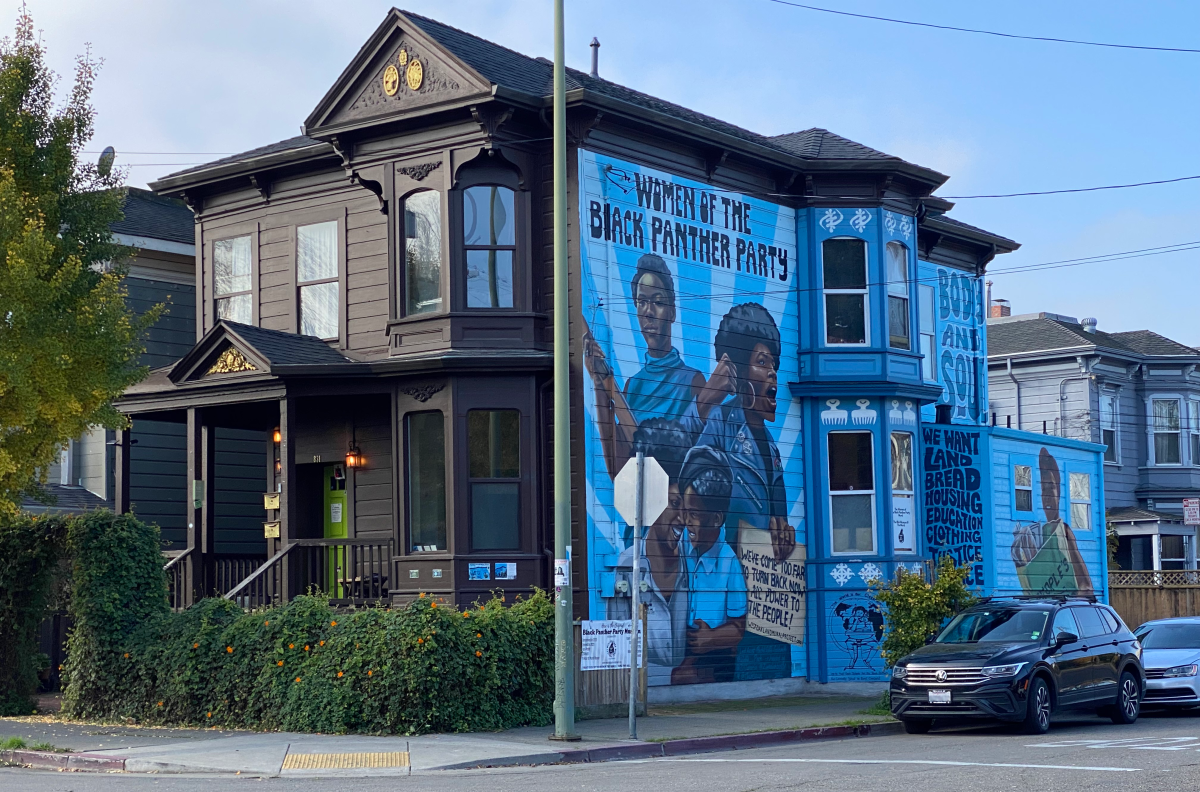
The Black Panther Party of Self Defense, or the Black Panthers, were founded in Oakland by Huey P. Newton and Bobby Seale in 1966. In their official 16 years of existence, they created programs that included free breakfast and lunch for children, free health clinics and sickle cell anemia testing. There were more than 40 chapters across the country and the world. The museum “preserves and promotes the true legacy of the ideals of the Black Panther Party."
The headquarters of the original location (1048 Peralta Street) where all national decisions and directives were made, as well as the location for the newspaper staff, is still standing. It later moved to a new location but a mural (831 Center St) was created in honor of the impact of the Black Panter Party (source: Visit Oakland).
(City crossover: State Capitol Demonstration)
African American Museum and Library at Oakland
659 14th St., Oakland
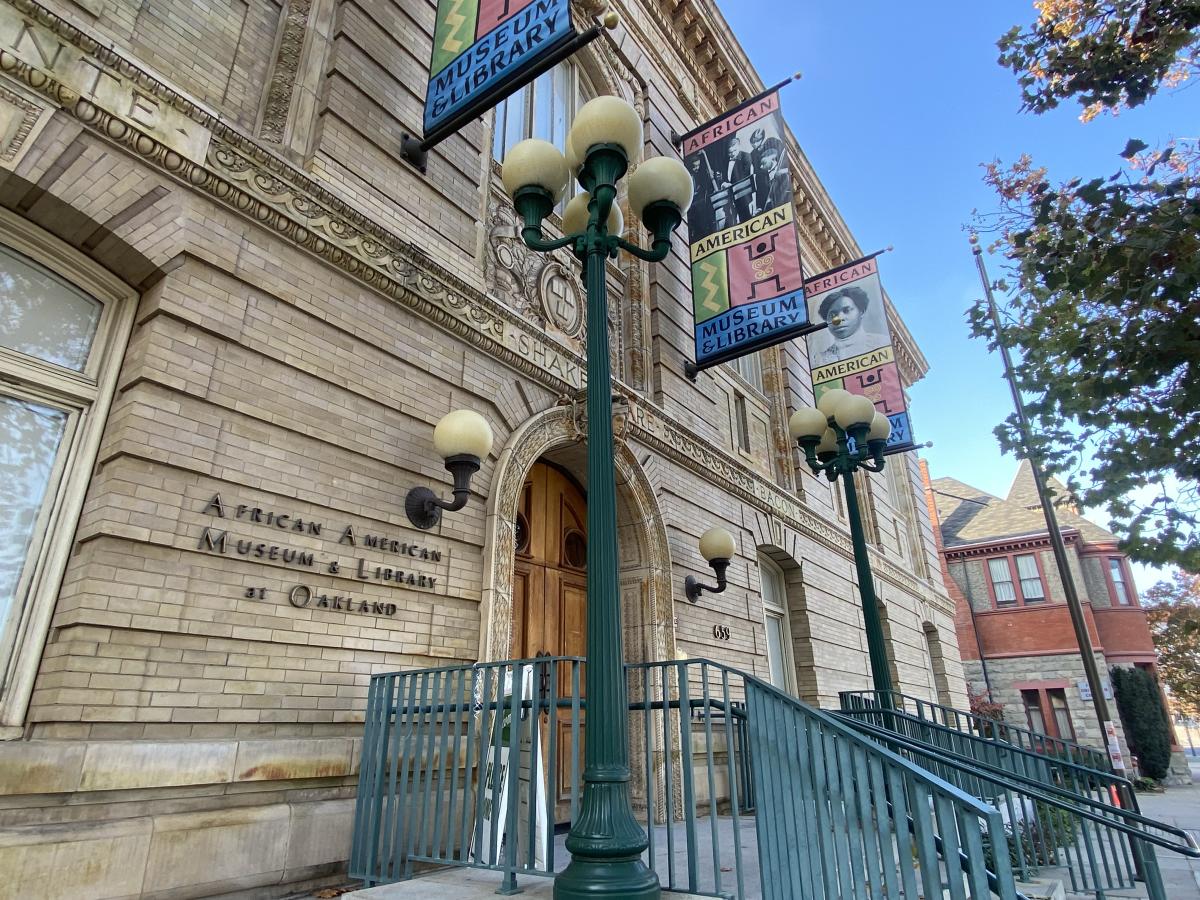
The African American Museum & Library at Oakland is “dedicated to the discovery, preservation and sharing of historical and cultural experiences of African Americans in California and the West… .” This reference library has a collection of approximately 12,000 volumes by or about African Americans.
Champions for Humanity Monument
1900 Rashida Muhammad St./19th & Telegraph (Henry J. Kaiser Park), Oakland
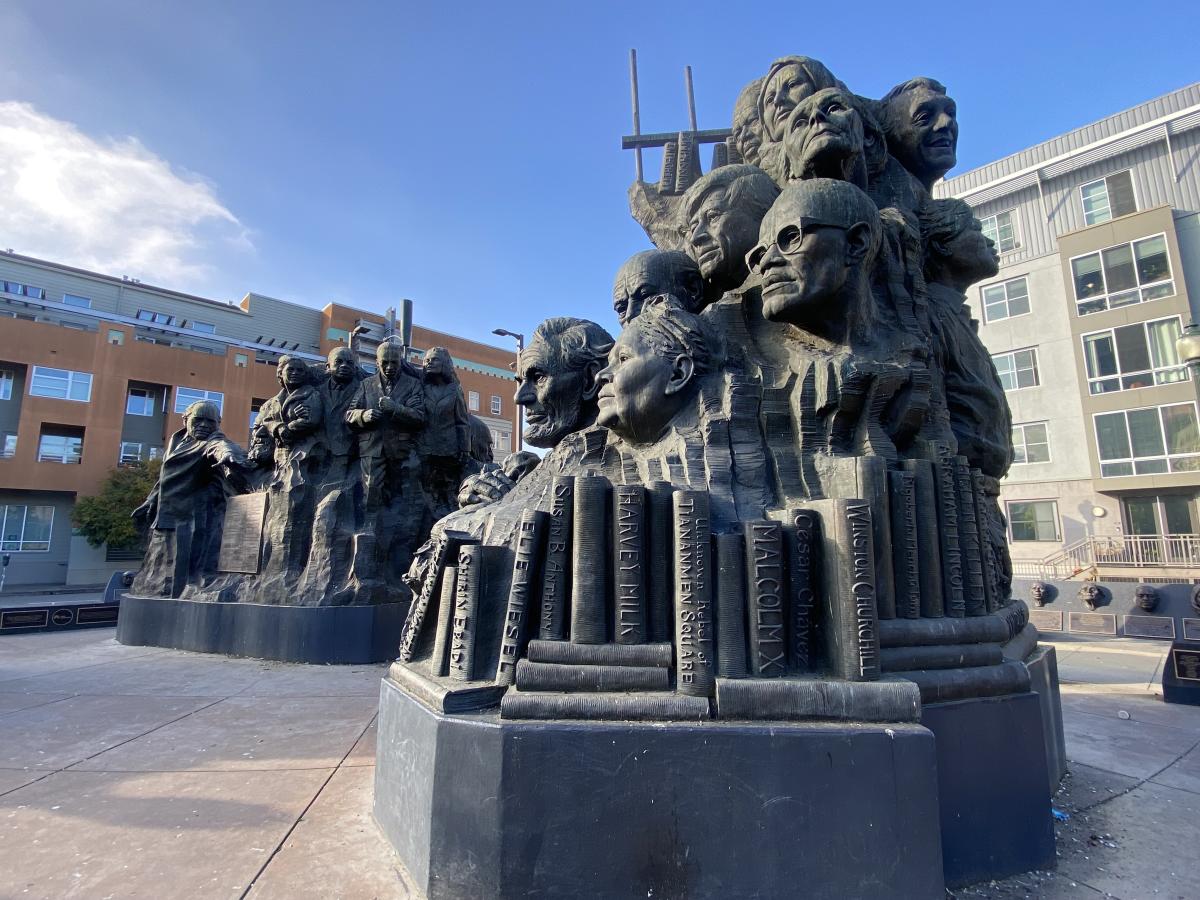
This larger-than-life monument depicts 25 culturally diverse role models who have made significant contributions toward global peace, freedom, and human rights over the past 150 years. This amazing sculpture was cast in 60,000 pounds of bronze, standing 31 feet high and 52 feet long featuring notables such as Ruby Bridges, Maya Angelou, Martin and Coretta Scott King, Cesar Chavez and Nelson Mandela.
San Francisco
William Alexander Leidesdorff Statue
One Leidesdorff Place (between Pine and California Sts.)
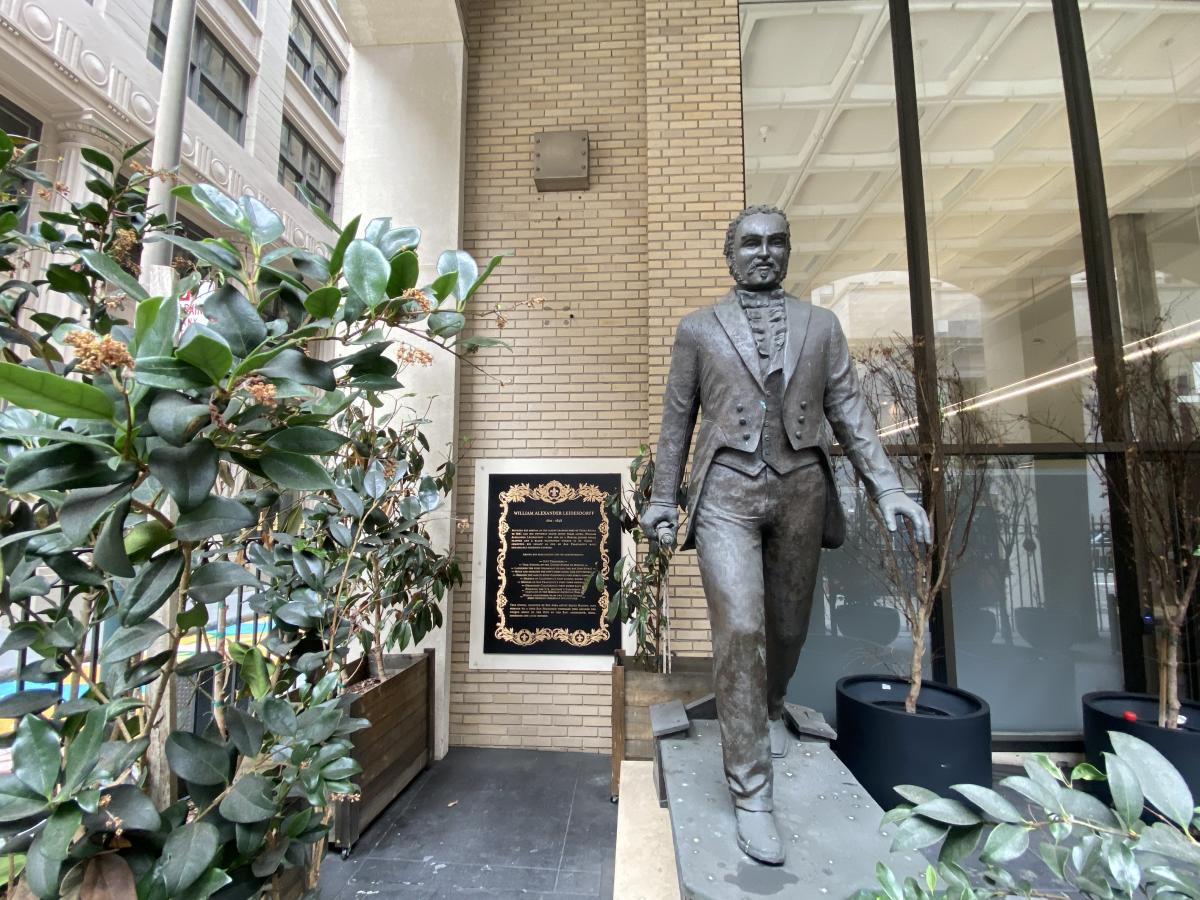
Of Danish-Jewish-African descent/heritage, William Alexander Leidesdorff was the country’s first Black millionaire. One of the original founders of San Francisco, Leidesdorff established the city’s first hotel, and was active in civic life, which included serving as town treasurer and donating land to create the first public school in California, and even sat on the state’s first school board.
Mary Ellen Pleasant Memorial Grove
1600 Sutter St./Bush and Octavia Sts., San Francisco
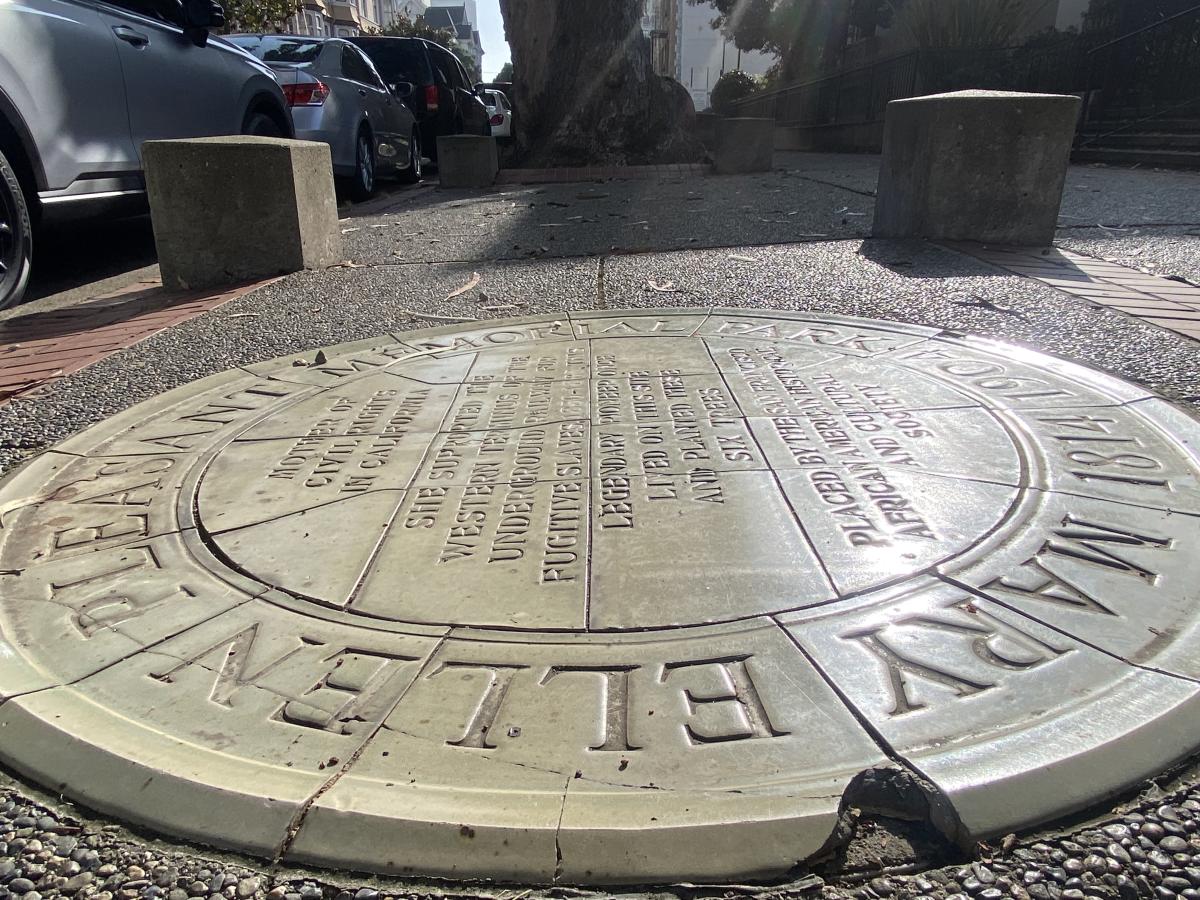
Known as the Mother of Civil Rights in California, Mary Ellen Pleasant was born into slavery and became a Gold Rush millionaire and a powerful abolitionist. She funded John Brown’s raid on Harpers Ferry, assisted escaped slave Archy Lee, donated money to support the Underground Railroad, and helped desegregate street cars in San Francisco, making her the first to win equal rights for African Americans to ride public transportation almost 100 years before Rosa Parks. Six eucalyptus trees, that she planted herself, and a plaque lie in the vicinity where Pleasant once owned a mansion.
Third Baptist Church
1399 McAllister St., San Francisco
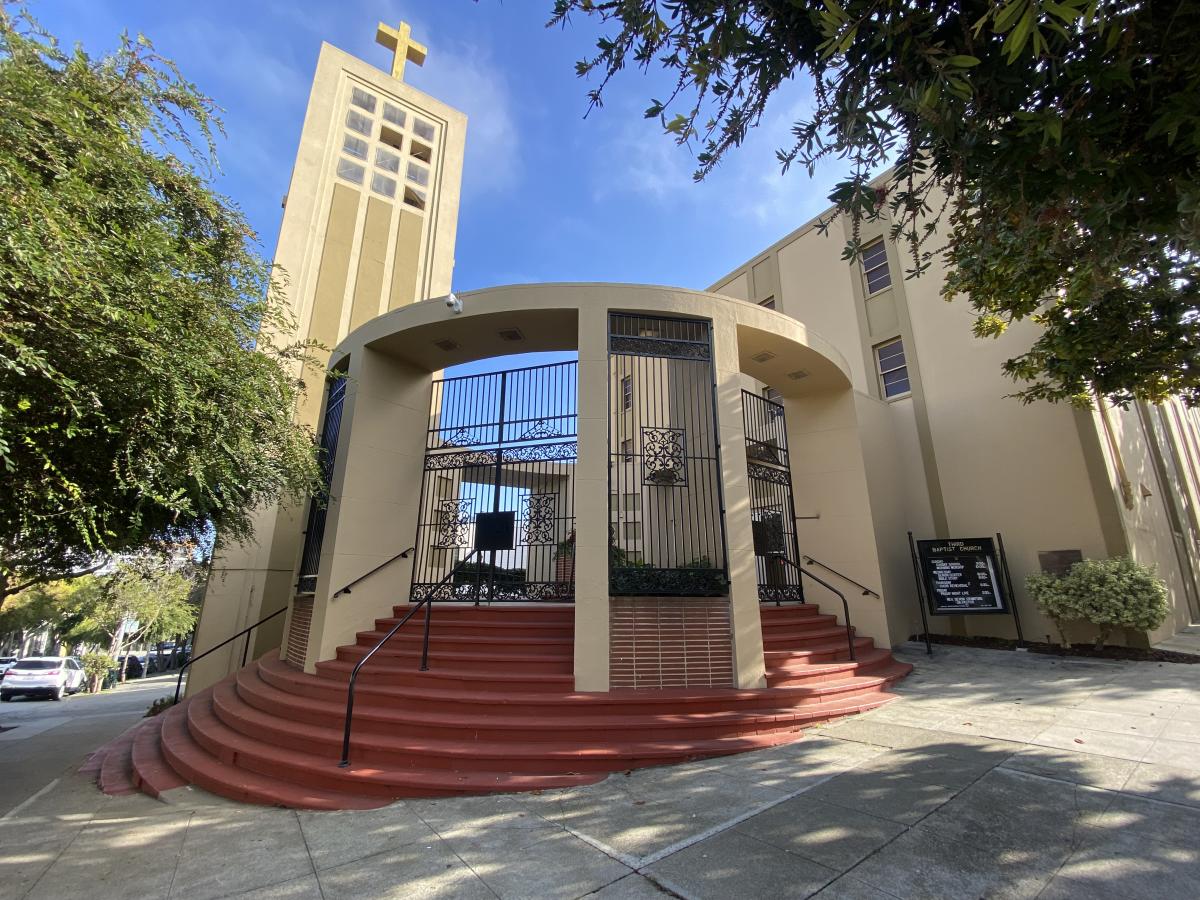
This registered state landmark formerly known as the First Colored Baptist Church has a storied civil rights history. Founded in 1852, it is the city’s oldest African American Church. From 1921 - 1972, the church operated Madame C.J. Walker Home for Girls and Women, an organization for single African American women new to the city who were not eligible to use the YWCA. Over the years the sanctuary hosted notables including Martin Luther King Jr., W.E.B. Dubois, and Paul Robeson.
Lorraine Hansberry Theatre
Fort Mason Center for the Arts and Culture, Landmark Building D, third Floor, 2 Marina Blvd., San Francisco
The Lorraine Hansberry Theater is one of the West Coast’s oldest and most renowned professional theaters dedicated to creating theatrical works by, for, and about the Black experience. Named after the playwright who wrote the landmark play A Raisin in the Sun which made here the first Black female to have a play performed on Broadway. She worked tirelessly on civil rights issues and global struggles. The theater produces works by Black artists – both well known and up and coming.
Willie Howard Mays Statue
24 Willie Mays Plaza, Oracle Park, San Francisco
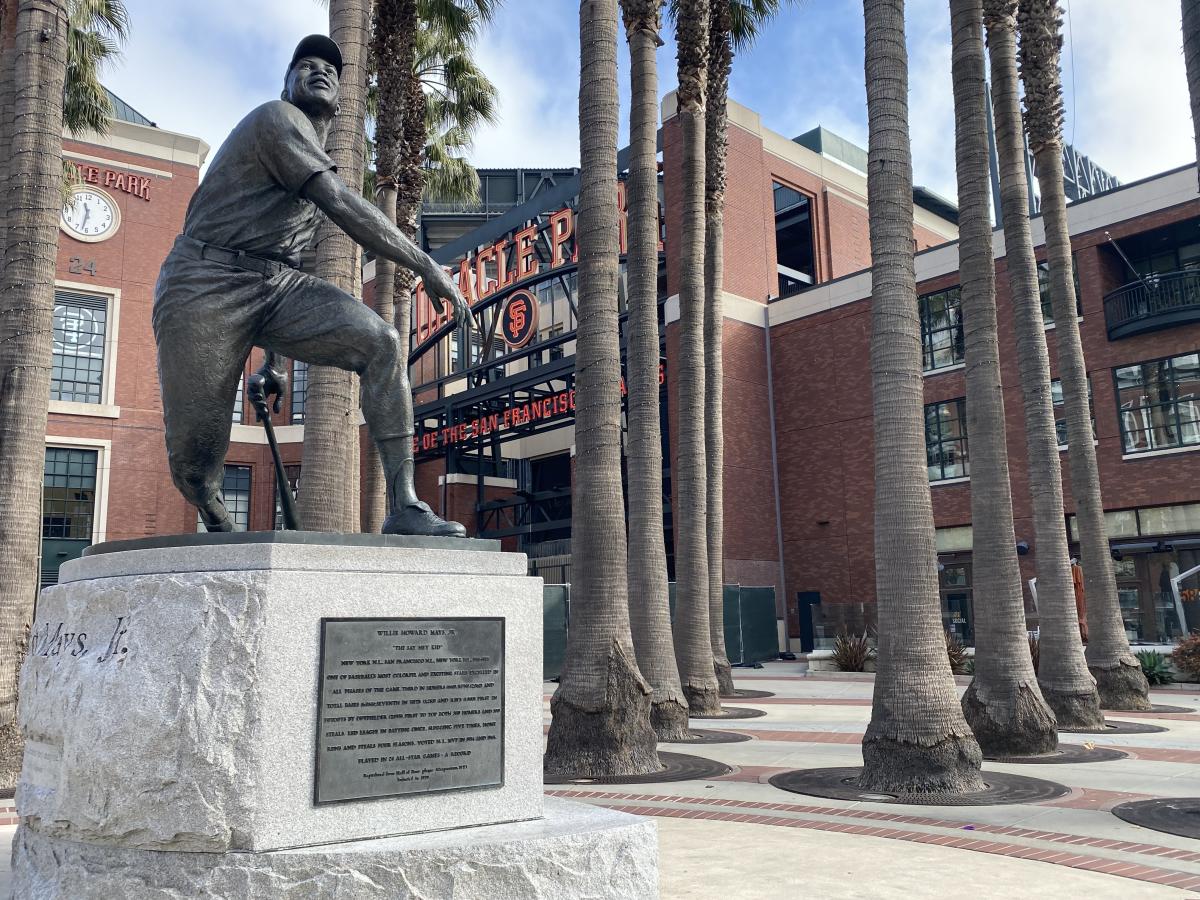
One of, if not the greatest, players in baseball history, the “Say Hey Kid,” Willie Mays wore a Giants uniform, first in New York, then in San Francisco for 21 seasons, 1951-1972. He would spend his final two seasons (1972-1973) with the New York Mets. The bronze statue commemorates Mays’ gargantuan swing given that he hit 660 home runs. Mays spent his post-retirement as member of the San Francisco Giants front office.